Protect mountains.
Reject destructive mining.
Mountains Not Mines exists to protect the mauri and integrity of Aotearoa New Zealand’s hills, uplands and mountains and promote ki uta ki tai stewardship from mountains to the sea.
TAKE ACTION
Support frontline campaigns and community resistance.
Climate Liberation Aotearoa
Support their campaign against fast track coal mining.
Visit Climate Liberation AotearoaNews
Recent analysis and environmental developments.
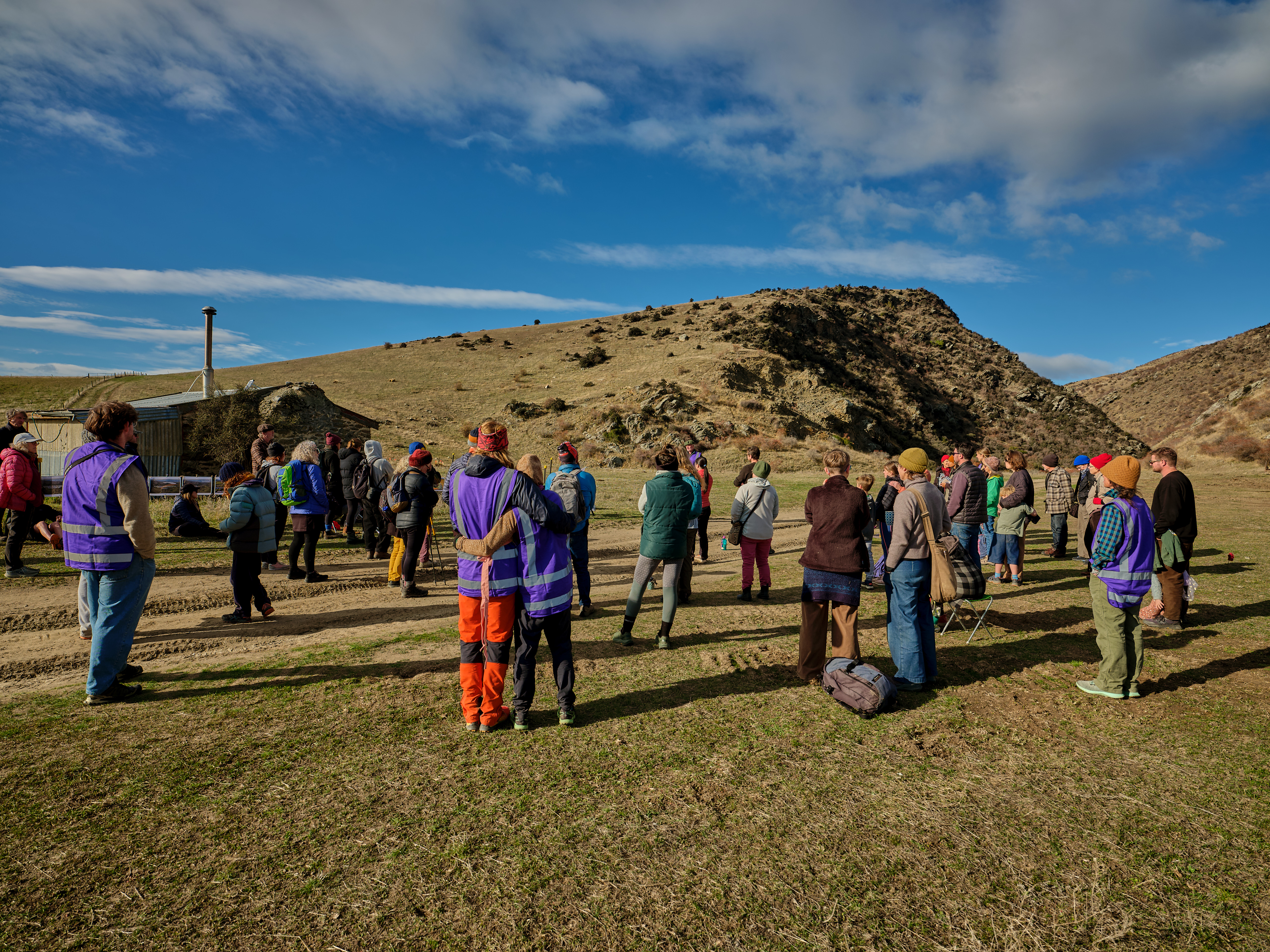
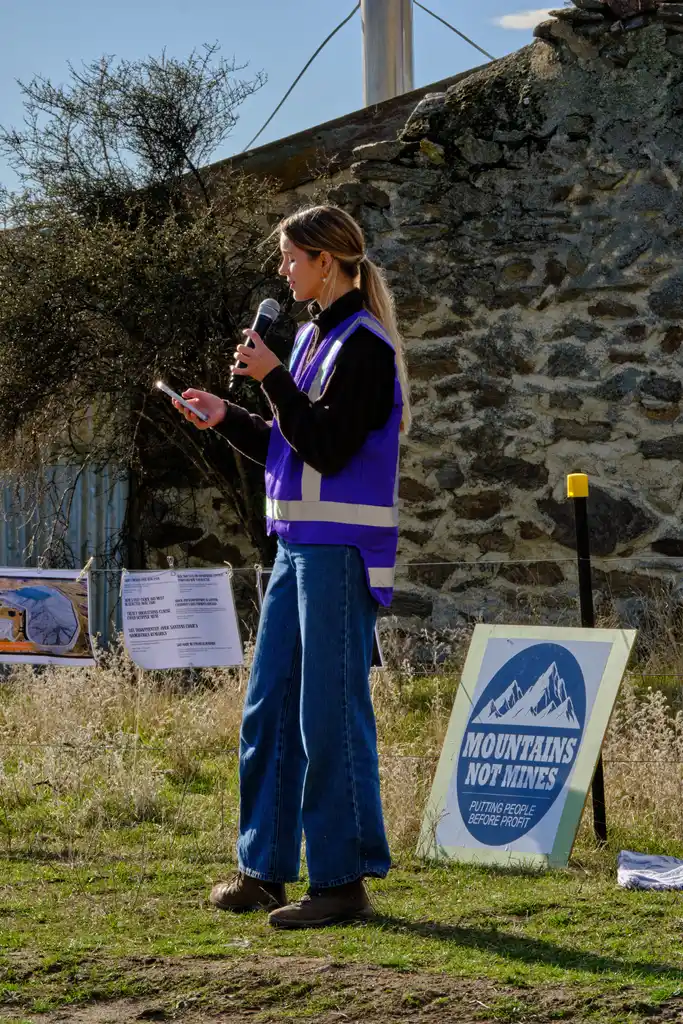
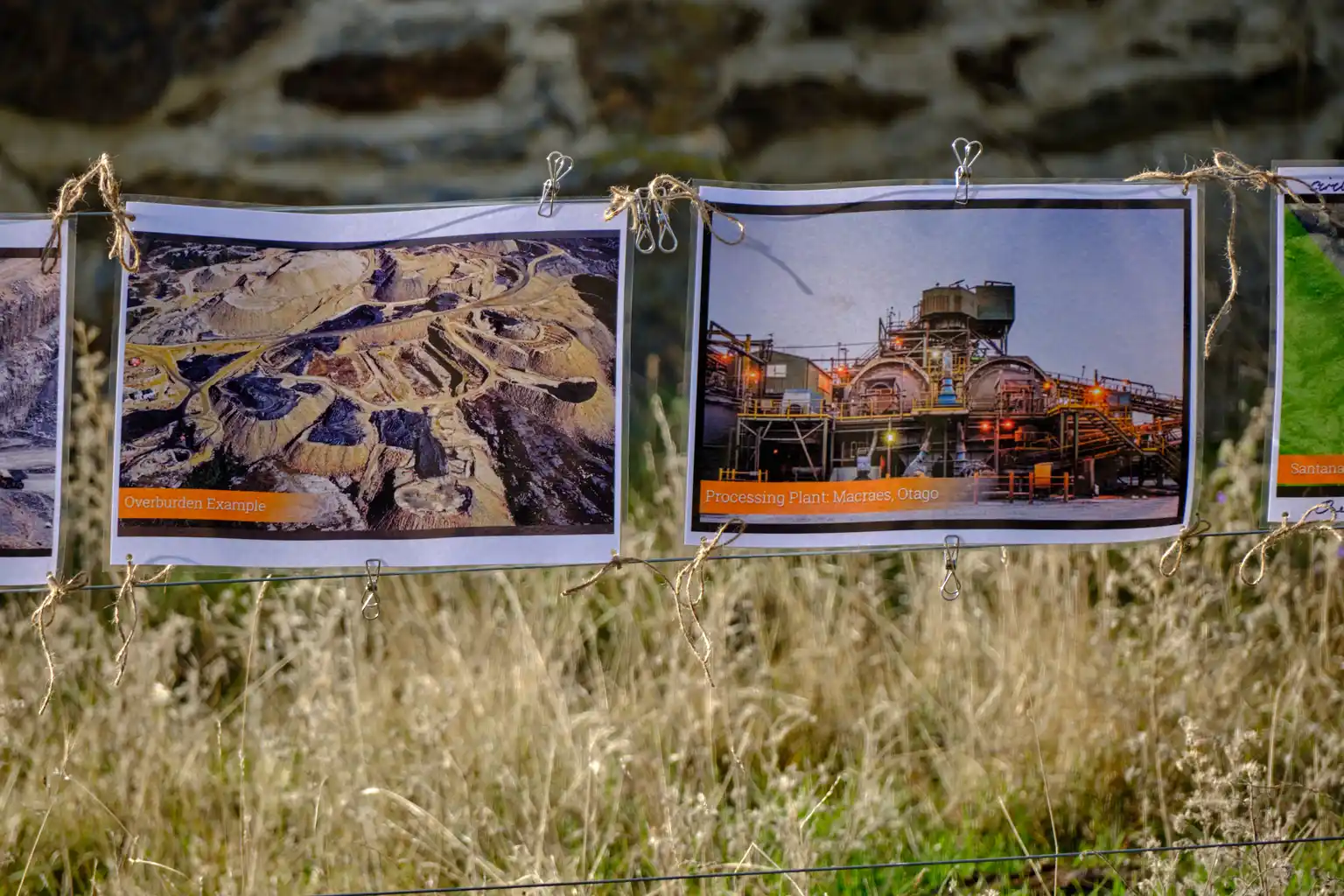
On Sunday 7 June 2026, Fool’s Gold Road hosted a social walk along part of the legal paper road at Shepherd’s Creek, Bendigo. First surveyed in 1898, this public route winds through land now affected by the proposed Bendigo-Ophir Gold Project, currently under Fast-track review application by Santana Minerals.
Sixty-two people travelled to take part, including some from as far as Dunedin. The walk began near the proposed processing plant site before continuing to the Boundary Riders hut at the mouth of Shepherd’s Creek, where local speakers shared concerns about landscape values, ecological damage, toxic waste, community wellbeing, the Fast-track process, and the long-term future of Central Otago.
“When an Australian mining company asks if they can create 18 million tonnes of toxic waste in these very hills, at the headwaters of rivers that feed our region, the logical answer is no.”
— Zoe Hawkins, Central Otago Natural Capital
“The Fast-track process is shameful, and should not be used to push projects like this forward. Decisions that will affect communities for generations should be made with communities, not around them.”
— Sarah Morrison, local resident and Fool’s Gold organiser
Speakers and members of the public affirmed strong opposition to the Santana Minerals project, describing it as a destructive extractive proposal with intergenerational consequences for local communities, waterways, landscapes, and ecosystems.
Visit Fool’s Gold RoadA recent analysis argues that it may be possible to phase out new gold mining entirely and instead rely on recycling existing gold stocks. This challenges the assumption that continued extraction is necessary, pointing toward a circular system where gold already in circulation becomes the primary source.
Despite improvements in mining practices and tighter regulations, gold mining remains one of the most environmentally destructive industries on Earth. It drives deforestation, biodiversity loss, and long term contamination of land and waterways across multiple continents. Even where mines close, toxic legacies such as acid mine drainage and heavy metal pollution can persist for decades, affecting entire catchments and ecosystems.
The climate cost is also significant. Research published in Environmental Research Letters shows that gold mining is highly emissions intensive relative to the material produced. At the same time, the industry is a major source of toxic pollution. Mercury used in small scale mining enters rivers and food chains, causing severe neurological damage and long term health impacts for millions of people worldwide :contentReference[oaicite:1]{index=1}.
In contrast, recycling offers a far less destructive pathway. There is significantly higher gold concentration in electronic waste than in natural ore, meaning existing products represent a viable and increasingly important source of supply. Expanding urban mining could reduce pressure on ecosystems while maintaining material availability.
At the same time, the economic justification for continued expansion is becoming less stable. A growing debate, highlighted in The Guardian, questions whether gold extraction should continue at all given its limited practical necessity and high environmental cost.
The narrative of gold as a reliable safe haven is also being challenged. Recent market behaviour, explored in this analysis, shows that gold prices can be volatile even during periods of geopolitical instability, undermining assumptions about its stability.
Taken together, the evidence points in a clear direction. The environmental, social, and climatic costs of gold mining remain severe and ongoing, while viable alternatives already exist. Protecting intact ecosystems is not only an ecological imperative, it is increasingly compatible with how materials can be sourced in a resource constrained world.
The systems that have historically buffered human driven climate change are now showing clear signs of strain. For decades land and ocean ecosystems have absorbed roughly half of all carbon dioxide emissions produced by human activity. These natural carbon sinks have slowed the rate at which greenhouse gases accumulate in the atmosphere.
However, new research published in Nature Climate Change indicates that terrestrial carbon uptake is weakening in many regions due to heat stress, drought, wildfire, and ecosystem disturbance. As temperatures rise and ecosystems degrade, the capacity of forests and soils to store carbon declines. When sinks weaken, a larger fraction of emissions remains in the atmosphere, accelerating warming and rapidly shrinking the remaining carbon budget compatible with climate stability.
This trend is consistent with broader measurements of Earth's energy imbalance. Analysis by climate researcher Leon Simons shows that the difference between incoming solar energy and outgoing heat radiation has increased dramatically. Satellite observations combined with ocean heat measurements indicate that Earth’s energy imbalance has more than tripled over the past two decades. This means the planet is accumulating heat faster than at any time in the modern instrumental record.
The ecological crisis extends beyond climate dynamics alone. According to the World Wildlife Fund Living Planet Index, monitored wildlife populations have declined by an average of 73 percent globally since 1970. In Latin America and the Caribbean the decline exceeds 90 percent. Biodiversity loss undermines ecosystem resilience and weakens the ecological systems that regulate water cycles, stabilise soils, and support food production.
Human economic systems are becoming increasingly exposed to these ecological stresses. A recent analysis reported by The Guardian describes the United Kingdom food system as a potential “tinderbox”, vulnerable to cascading disruptions triggered by extreme weather, infrastructure failures, cyber attacks, and global supply shocks. Similar vulnerabilities exist across many industrial food systems that depend on tightly coupled global logistics networks.
At the same time, the scale of human transformation of the biosphere continues to expand. Research reported in The Guardian found that the total mass of human made materials such as concrete, asphalt, plastics, and metals now exceeds the mass of all living biomass on Earth. This milestone reflects the extraordinary expansion of industrial extraction and construction over the past century.
Taken together, weakening carbon sinks, accelerating planetary heating, collapsing wildlife populations, stressed food systems, and continued material expansion point toward a biosphere under intensifying pressure. These trends reinforce the urgency of protecting intact ecosystems, rapidly reducing fossil fuel emissions, and preventing further destructive extraction in vulnerable landscapes.
Mining Comic
Do we really need another gold mine in Otago?
Contact
For now use the email below.